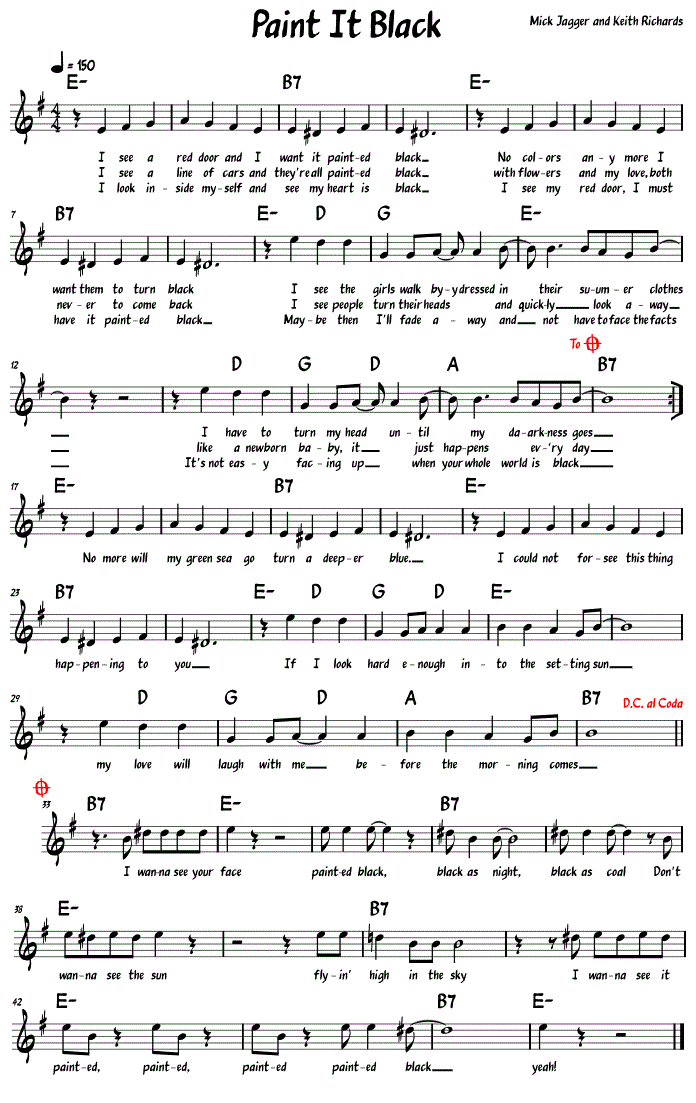
The Rolling Stones (#1 in 1966),
(stayed at #1 for 2 weeks, replaced by Frank Sinatra's Strangers in the Night)
I see a red door
And I want it painted black
No colors anymore
I want them to turn black
I see the girls walk by
Dressed in their summer clothes
I have to turn my head
Until my darkness goes
I see a line of cars
And they're all painted black
With flowers and my love
Both never to come back
I've seen people turn their heads
And quickly look away
Like a newborn baby
It just happens everyday
I look inside myself
And see my heart is black
I see my red door
I must have it painted black
Maybe then, I'll fade away
And not have to face the facts
It's not easy facing up
When your whole world is black
No more will my green sea
Go turn a deeper blue
I could not foresee this thing
Happening to you
If I look hard enough
Into the setting sun
My love will laugh with me
Before the morning comes
I see a red door
And I want it painted black
No colors anymore
I want them to turn black
I see the girls walk by
Dressed in their summer clothes
I have to turn my head
Until my darkness goes
I wanna see it painted
Painted black
Black as night
Black as coal
I wanna see the sun
Blotted out from the sky
I wanna see it painted, painted, painted
Painted black, yeah
Using colour-based metaphors, the song's lyrics describe the grief suffered by someone stunned by the sudden and unexpected loss of a partner.
Over 1965, the sitar had become a more and more prominent instrument in the landscape of British rock. The first British band to release a recording featuring the sitar was the Beatles, with "Norwegian Wood (This Bird Has Flown)" released that December on the album Rubber Soul. Following a discussion with the Beatles' lead guitarist George Harrison, who had recently played the sitar on the sessions for "Norwegian Wood" in October 1965, Jones began devoting more time to the sitar, and began arranging basic melodies with the instrument. One of these melodies morphed over time into the tune featured in "Paint It Black".
Jagger and Richards wrote the lyrics and much of the chord progression of "Paint It Black". In mid-January 1966, the British press announced that a new Rolling Stones LP carrying that title "Could You Walk on the Water?" would be released on 10 March. In Rolling with the Stones, Wyman refers to the announcement as "audacity" on Oldham's part. A Decca spokesman said the company would not issue an album with such a title "at any price"; Oldham's idea upset executives at the company's American distributor, London Records, who feared the allusion to Jesus walking on water would provoke a negative response from Christians. The title controversy embroiled the Stones in a conflict with Decca, delaying the Stones' next studio album's release from March to April 1966.
The song was written originally as a standard pop arrangement in a minor key similar to "The House of the Rising Sun", which Jagger humorously compared to "songs for Jewish weddings".
This song may have the first recorded example of a fretless bass guitar. Wyman had removed the frets from a bass intending to replace them, but became enamoured with the fretless sound. This can be most easily heard near the end of each vocal line, when Wyman plays high on the bass's neck, using the upper register.